Spray Foam vs. Blown-In vs. Batt: Which Insulation Is Best for a Colorado Home?
Spray foam, blown-in, and batt are the three insulation types you'll actually choose between for a Boulder home, and homeowners understandably want to know which is 'best.' The honest answer: each one is best at something, and the strongest homes use all three in the right places. Here's a clear comparison so you know what belongs where.
Spray foam: highest performance
Spray foam is the premium option. It expands to fill every gap, delivering the highest R-value per inch of any common insulation and — crucially — air-sealing at the same time. That combination makes it the standout choice for basements, crawlspaces, rim joists, and vaulted ceilings where air leakage and limited depth are the challenges. It comes in open-cell (lighter, cost-effective air seal for interior walls) and closed-cell (denser, higher R-value, moisture barrier, ideal for below-grade and exterior applications).
The trade-off is cost: spray foam is more expensive per square foot because it does more. The smart approach is to use it where its air seal and high R-value genuinely pay off, rather than everywhere by default.
Blown-in: fast, even, cost-effective
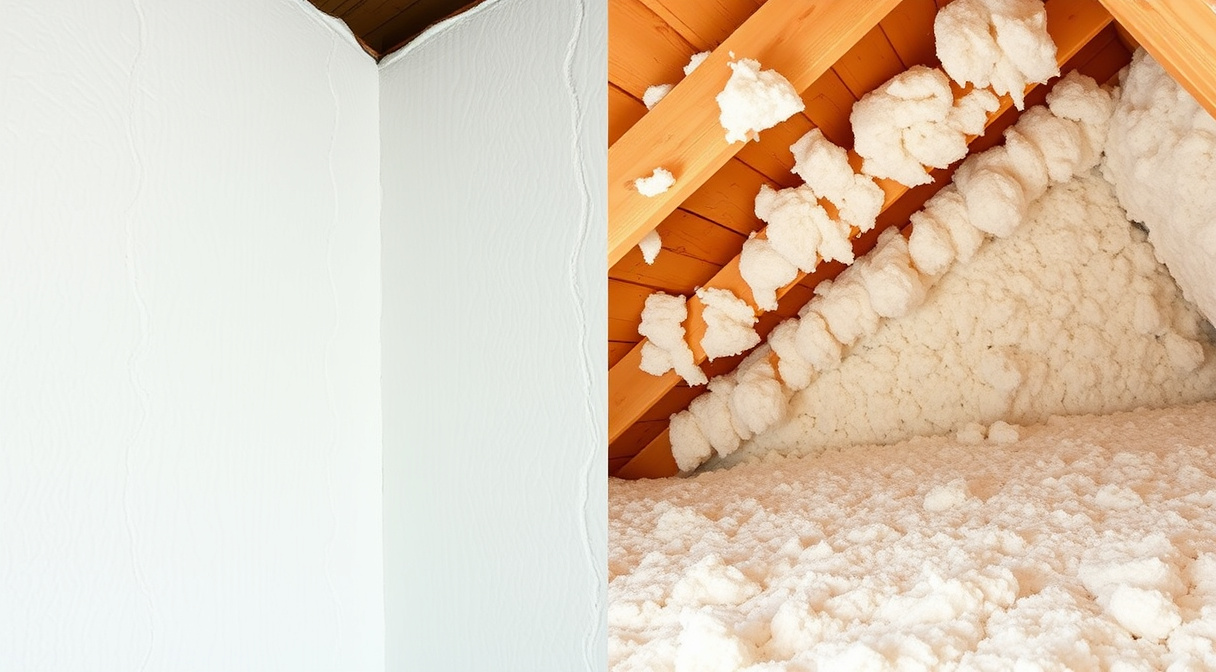
Blown-in loose-fill — cellulose or fiberglass — is the workhorse of attic insulation. It's blown through a hose to fill the attic floor evenly, flowing around framing and obstructions to eliminate gaps. For reaching Colorado's R-49 to R-60 attic targets across a standard attic, blown-in is fast, cost-effective, and hard to beat. Paired with air sealing first, it delivers excellent real-world performance for the money.
Cellulose (recycled, dense, good at slowing air) and fiberglass (light, low settling) are both strong options; the right one depends on the space and your priorities.
Batt: reliable and economical in open framing
Batts — pre-cut fiberglass or mineral-wool blankets — are the economical choice wherever framing is open, like new construction, remodels, and floors over crawlspaces. When installed correctly (cut to fit, snug, split around wiring), they deliver reliable rated R-value at the lowest cost per square foot. Mineral-wool batts cost more but add fire resistance and excellent soundproofing, making them great for interior and shared walls.
The catch is installation quality: compressed or gapped batts lose a large share of their rated R-value, which is why professional installation matters more with batts than with any other type.
A quick comparison
- Highest R-value per inch: spray foam (closed-cell)
- Best air seal: spray foam (blown-in and batt need separate air sealing)
- Best value for a standard attic: blown-in
- Lowest cost in open framing: batt
- Best for basements, crawlspaces, rim joists: closed-cell spray foam
- Best soundproofing: mineral-wool batt
So which should you choose?
Don't choose one — choose the right one for each part of your home. A typical Boulder upgrade might air-seal and blow in the attic to R-60, spray-foam the rim joists and crawlspace, and use batts in a newly framed addition. That's how you get the best performance for a sensible budget. We assess your home and design the combination, then explain exactly why each choice makes sense. Call 844-967-5247 for a free assessment.
Frequently asked questions
No. Spray foam has the highest R-value per inch and air-seals as it insulates, which makes it ideal for basements, rim joists, and vaulted ceilings. But for a standard attic floor, blown-in with proper air sealing usually delivers comparable comfort and savings for less. The best choice depends on the location.
In open framing, batt insulation is typically the lowest cost per square foot. For attics, blown-in loose-fill offers excellent value. The cheapest option isn't always the best value, though — air sealing and reaching the right R-value matter more than the sticker price of the material.
Ready for a free quote?
Tell us about your home and we'll build a clear quote — rebates included.